Tuesday, February 4, 2014

Another World (February 2014) by Kate

I'm not really a writer, but here's a few things I can share with you all about my world right now:

This new place is not as I expected. I am different here, I spend my time differently. I care a lot about the quality of wood for the fire but not as much about my to do list for the day. I feel the gravity of our decision to come here, but I don't worry as much.

I love chopping wood and hanging the laundry, but I find dreaming and planning exhausting. I feel welcome in these woods and I've discovered that I don't mind stinkbugs. But I don't deal well with the cold.


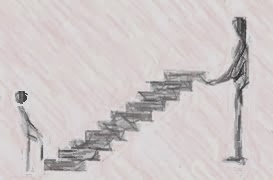
I'm not at home. It feels like I'm living in someone else's house. ..someone tall and strong, and braver than me. I'm not sure where my home is. I had thought I would feel settled and this would feel like home by now. But I can see now that I'm here that it may take a long time. I suppose this is ok.


I have a lot of hopes for who I can be here and what I can do. But I think I need to go about it all gently. I feel most at home now with you all, dear friends. 

Saturday, February 1, 2014

Another World (February 2014) by Jonathan


I was reflecting with a friend the other day that I inhabit many different worlds in which I am the only common denominator. This is not a great revelation, I realize, but rather a truism.... everyone has this same experience. Nonetheless, since I have people around me that are picture-takers, and a picture is worth a thousand words, I thought I'd share a bit about the world I'm in right now: Puerto Rico.


One of the highlights (as you might expect) of being home is that i get to hang out with my niece. She is 2 1/2, like puzzles and has a ear-piercing scream when she doesn't get her way. Here, Tío (Spanish for uncle) is cracking almonds with Amaiyah.
Inline image 1

Its also been great to loaf around the house with my sister (Raquel, down from Harrisonburg) and my brother David (proud parent of the little face).

Inline image 2

Puerto Rico is a colony of the US (we still have colonies?? WTF!) and has seen rapid societal changes in the past 100 years (like a lot of the world, I guess) My grandmother, at 93, has seen a lot of that. She told me while we were visiting this past weekend how she bought her first pair of shoes at 10 years old when she made enough money harvesting tabacco to buy them herself. She started first grade in school and dropped out when an American came to the classroom and she was terrified that the tall white man was going to eat her. That is the total of her formal education.

Inline image 3

However, there are still a few ancient traditions that are fighting their death. A "parranda" is the Puerto Rican version of Christmas caroling where the neighbors gather and play traditional instruments (cuatro: the guitar-looking thing; güiro: the hollow gourd; maraca: you've seen The Mask) and sing folk music, sometimes terribly out of tune. The girl in the salmon shirt is my sister-in-law.

Inline image 4

This man is my crazy uncle who, after a long professional career retired to a "traditional" life-style where he cooks over open fire and plows land with a team of oxen. You've probably heard me talk about him. Also, he looks just like my late grandfather did at that age.

Inline image 6

Of course no trip home would be complete without letting my mother shower me with nice things and an off-season (It's winter!! Cant you tell?) trip to the beach.

Inline image 7

Inline image 8


If you care to know, ask me sometime about "becoming an adult" both in a family context and in a societal context (the last time I lived in PR I was 16). So there, 7,000+ word email! Wow, that is the longest email I even wrote!

Much love.

Friday, January 31, 2014

Vanity (January 2014) by Jonathan

Short story long:
My group of friends that I affectionately call the Hippy commune is a collection of relatively like-minded people. Some of us lived in a house together in college and have managed to remain each others support system through travels abroad, marriages and children and miscarriages, through changes is work and spirituality. We have hurt each other plenty and are helping to raise each others kids and are still learning how to value each other in our differences. 
For a while there, we were actively looking for a way that we could live out our desire to be part of each others lives on a day-to-day basis. We started working on a book designed for people starting intensional communities, formally met to work towards this every two weeks, formed work-groups, looked at land and legal procedures and beat each other up trying to articulate our "common vision" that would be the centerpiece of our lives together. 
We soon discovered that our live vision, whether individual, or as a family, or as a group were very hard to talk about. It turns out that even after some 7-10 years of being good friends, our vision and desires and expectations are so intimate, so close to our hearts that they were hard to speak and hard to have critiqued. But we knew it was supposed to be hard, so we kept right on going. Round after round, we kept looking for new ways to see ourselves and our troubles and to try to make our visions compatible. We made charts and drew pictures and had one-on-ones and cried and called each other out on our bull shit (I got a lot of this, by the way).
In the end, it fell apart. In a whirlwind of exhaustion and eagerness and longing, we stopped our formal meetings. Over the next couple of months, we had a lot of "what you said was hurtful" and "what did we do wrong" and "so what does this mean now" conversations. In retrospect, one of the things that happened is that the formal process high-jacket our friendships. We were so invested in what we were trying to do together, put so much energy into getting somewhere, that we lost each other and we lost the time and energy to care for each other and to accept each other. Thankfully, by the time we tried this formal process, we had years of love and affection and working-through-stuff built up in the reserves, so the hurts of this mess we made were not insurmountable. 
The happy ending to this story is that our relationships survived. And some small changes have been made in our living situations, and we are healing from that process (and gone through some others since) and that whatever it is that keeps us needing each other is still true. I'm grateful for this.

Thursday, January 2, 2014

An off-topic but relevant post by Jonathan


Early in the morning, before the sun can touch the dew, two farmers walk the narrow roads out to their fields. They have always been farmers, like their fathers and mothers before them. But they are not alike. One loves her field, loves her work, loves Gods gifts that come through her little plot. To her, the farm is alive, and she herself is part of it. The other sows begrudgingly and waits impatiently and harvests without gratitude. To her the plot is an object, a means, and she does not spend time there if she has a choice. The affectionate farmer will observe the field, see what grows, smell the soil, watch the seasons. She is attentive and will adapt her ways as the field asks her to. The dismissive farmer, on the other hand, will be blind to her field: she will plow when the soil is too wet, water on schedule regardless of rain, and not know the difference between good bugs and bad bugs. The affectionate farmer is a dynamic farmer, a farmer who will make mistakes and learn from them, a farmer who will be satisfied with good work. The begrudging farmer looks for opportunities to take shortcuts, does what she has always done, and suffers the work she must do.
“All work is empty save when there is love; And when you work with love you bind yourself to yourself, and to one another, and to God.” In this parable it is the attentive, dynamic farmer that works with love, who's work is a labor of love. We are called by God that is Love to enter into God's work like the affectionate farmer.
We are like the dynamic farmer when we join those who came before, who heard God speak “behold, I will do something new”: behold, I've created out of nothing; behold, I go before you, travel light; behold, I have made you a people; behold, I AM, even without a Temple; behold, my mercy extends even to your captors; behold, I come to you helpless; behold, death will not have the last say; behold, you are free from appeasing Me (and each other). Behold, New Heavens and a New Earth.
This is our story: the story of a dynamic God coming to us, speaking to us, saving us, in ways expected and unexpected. We belong in this story where God does something new. Even our individual lives reflect our Makers dynamic nature. I am not who I was twenty, five, or even one year ago. Neither are our friendships or families or marriages. Neither are our congregations or our towns. The ancients named the dynamic nature of the world when they said “you cannot step into the same river twice”2.
So it is with love (and because of Love) that we seek to become like the affectionate farmer who understands that the field is alive. We, like the farmer, belong to a tradition that has an open posture. She is attuned to things that she knows, like the coming of the seasons and the names of the seeds. But she is also on the lookout for things she has not seen before. Because she loves her field and is part of it, she will seek out ways to be a better farmer. In our modern age, we call this “life-long learning”, but don't be fooled by the sterile-sounding name: it is nothing short of love for our fields.
However, most of us are not farmers and our “love being attentive” can look many different ways. Maybe its more time in silent places that sharpens our senses, maybe its the stimulation of books and schooling. A hobby that is far out of our comfort zone might shed light on our work. Or a mentor might guide show us a direction in which we can grow. Trying to find common ground with someone that we “can't relate to” might sharpen our eyes to see how the Spirit is at work.
Whatever the path, whatever the field, we will act faithfully as we grow attentive to the new things that God is doing in our midst. May the God who causes the rain to fall on the just and the unjust give us eyes to see and courage to join in to the coming forth of the New Heavens and New Earth.
1 From The Prophet, by Kahlil Gibran
2 Heraclitus of Ephesus

Respectfully, Johnathan Schlabach

Wednesday, January 1, 2014

Vanity (January 2014) by Renee


There it is again,
That finger pointing inward,
calling forth a retchedness
hiding within. I want it out! 
People can see it
swelling up in my gut
and rolling from my chin.
I'll point that finger of blame
at myself, until it scores the gullet.
I know this is wrong.
I am so ashamed.
But shame is just one more motive.
The crying isn't self-pity. 
It's scary, but the tears
are not from fear.
 There's an acidity suiting
to this corrosive experience.
It stains my nose. Great. 
Now I stink too.
Once that feeling of drowning
passes, I feel better. For now. No,
forever this time. No more of this!
But I am too indulgent. Too impulsive.
So blindly ambitious.
I'm just like my family. I feel
that choleric inheritance land,
like a knighting sword, squarely 
on my shoulders as I kneel
 in front of a white throne
where I must purge myself
of myself and my true hungers
for that insatiable appetite for perfection.  


Tuesday, December 17, 2013

Consumers Anonymous (December 2013) by R


Addiction is tricky. It’s in our brain. It’s in our muscles. It gets tangled up in every aspect of our life, so that when we try to quit, the negative habit is triggered by other, healthy pieces of our life that we do not want to lose.  

There is a tendency in our culture to use clinical services of counseling and medicating for addiction; an individual’s solution to the individual’s problem. But a popular intervention has been the twelve-step program. The steps provide people with a course of action (which we all feel we need from somewhere outside ourselves), as well as a built in support network, or ‘fellowship’.

The steps differ based on the culture of the addiction or compulsion. Narcotics. Sex. Gambling. Work. But very generally, people are asked to admit that they cannot control their addiction, see strength in some higher power, reflect on their life with a sponsor, make amends for their errors, develop a new code of behavior and learn to live it, and then to help others through the same path.  

Consuming is an addiction, but a culturally sanctioned addiction. Other addictions, like alcoholism or sex, may be glorified in our culture, but they also come with negative moral connotations. Consuming, on the other hand, is considered responsible. Necessarily. How do you declare yourself addicted to something as assumed as breathing? But we’ve been paying to live on oxygen tanks while we go indoors to escape the wind.   

Twelve steps:
1.                   Admit we are disempowered by the compulsion to consume—that our lives have become unmanageable.
2.                   Believe in a restorative power greater than ourselves as individuals.
3.                   Decide to turn our lives over to the care of this Earth and Her Spirit and a family of life.
4.                   Make a searching and fearless moral inventory of ourselves.
5.                   Admit to the Spirit of this world, to ourselves, and to another human being the exact nature of our over consumption.
6.                   Be entirely ready to have the sufficiency of this world end our addictive behavior.
7.                   Reach within and beyond ourselves to overcome limitations.
8.                   Consider all in the family of life we have harmed, and become willing to make amends to them all.
9.                   Make direct amends wherever possible, except when to do so would injure them or others.
10.               Continue to take personal inventory, and when we are consuming beyond the design, promptly admit it.
11.               Meditate to improve our conscious contact with the Spirit of this world and the entire family of life, praying only for a better understanding of our relationships and the power to carry out our role in sustaining one another.
12.               Carry this message to other consumers, and practice these principles in all our affairs.


Hello. 
My name is Renee, and I’m a consumer. 
I don’t know how else to live. 
I trust there is a Way. 
I commit to exploring my behavior and its impact on all in the family of life. 

Wednesday, December 11, 2013

Consumers Anonymous (December 2013) by L


I wasn’t’ offered health.  A whole way of being in the world was not my inheritance.  So here I am an addict, trying to be whole with things.   


thing

noun

1.a material object without life or consciousness; an inanimate object.


Things.  This is all we have to satisfy us.  So we say, so we create, so we have.  Only things.  Nothing is sacred, nothing mysterious, nothing alive and conscious and loving to join us and make us whole.  Only things or the hope of supernatural redemption.  (i.e. this world is a joke, a game, the real deal is somewhere else--hang around it’ll be sweet)


What the hell. No, I don’t buy it.  I’ve tasted wild water. I knew this as a child. The earth is alive.  We are all the family of life and we sustain each other.  It’s all here. 


But how do I drop my addiction?  How will I be cared for?  It’s not like we have people showing us the way.  I’ve only started to meet a few people I think to be on that path.  And damn is it hard.  How do you let go?  How do you trust it at this point? Certainly it’s all going to fall apart?  How does an entire global culture drop an addiction?

How do I drop my addiction?  When everyone around me is killing the earth how can I put my trust in it? How can I leave my comfort?


But what else is there?  JUST THIS MOMENT OF BLISS. Indulging again.

HELP ME, FRIENDS.